

The Day | Andrew Berman, Preservationist or ‘Obstructionist’?

Good morning, East Village.

The video above just hit YouTube and is said to have been made for the PS 122 video workshop. It pairs audio of Paul DiRienzo’s coverage for WBAI of the 1988 Tompkins Square Park riots with video of the park ten years later. But the park’s history of protest isn’t entirely behind it: stay tuned for our report from the Occupy Town Square event yesterday.

Crain’s New York profiles Andrew Berman, the head of the Greenwich Village Society for Historic Preservation who is often quoted in these pages. And the profile isn’t exactly flattering: dubbing him “The Obstructionist,” Crain’s says that “developers may finally be getting the upper hand on their longtime tormenter” (citing NYU 2031, among others) and writes that “Mr. Berman’s outsize personality and nose for the limelight has alienated activists, community board members and other neighborhood groups who have been his allies over the years. At the same time, dustups between Mr. Berman and others have bruised egos and increasingly splintered a fragile coalition seeking to insulate the area from development.”

Speaking of gentrification, The Daily News notes that Life Cafe is for rent, and gets the obligatory quote from the publicist for “Rent,” which was written at Life: “The East Village of ‘Rent’ is a very different place than the East Village of today,” says Richard Kornberg. “‘Rent’ helped gentrify that neighborhood, but unfortunately places like Life which were once institutions could no longer fit in the market.” Read more…

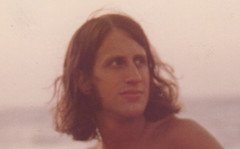
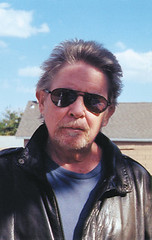
Alan Abramson’s Fan-O-Gram to the East Village Other

OtherBanner

Because something is happening here
And you don’t know what it is
Do you, Mister Jones?
– “Ballad of a Thin Man” by Bob Dylan (from “Highway 61 Revisited,” 1965)

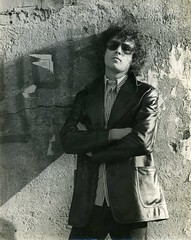
Alan Abramson - 1972 copy Alan Abramson, 1972.

The times were overwhelming. America was violently awakened from the slumber of the 1950s on Nov. 22, 1963 and quickly found itself inhabiting an unrecognizable, incomprehensible, rapidly evolving reality. The Civil Rights Movement, the Vietnam War, the Free Love Movement, the Women’s Liberation Movement, the Gender Equality Movement, the Consciousness Raising Movement, the Save Our Planet Movement, the Eastern Mysticism Movement, and sex, drugs and rock and roll all conspired to create a giddy, euphoric Renaissance. If you were a nice young person raised in Eisenhower-era suburbia, the questions that consumed you were: “What the hell is going on? What does this all mean? Where do I fit in?” And most importantly: “How do I get invited to the party?”

Enter, The East Village Other. For me it was the Rosetta Stone that enabled me to decode the meaning of the ‘60s.  Attending Oberlin College from 1964 to 1968, I experienced an environment that was receptive to the Strange Days that were sweeping the nation. I had a subscription to the Village Voice, which retained an aura of cool, post-Beat sensibility.

All of the sudden, however, it was left way, far behind: things were happening much too quickly for it to process. The ‘60s were not about quiet, low key cool. The ‘60s were flaming hot. There was a void in the media. Nature abhors a vacuum and something Other was desperately needed (I always felt that the name was a play on words, dissing its neighbor from the West Village). Like Athena springing fully clad in armor from the aching head of Zeus, The East Village Other burst upon the scene. The Other was not your parents’ newspaper. Read more…


Joe Kane: I Got My Gig Through the East Village Other

OtherBanner
JoeKane by Nancy NaglinNancy Naglin Joe Kane

A veteran of The New York Ace, High Times, The New York Daily News and many other publications, Joe Kane describes how he got his start at EVO.

When I first migrated to Manhattan from Queens in 1970, it was with dreams of becoming a working scribe, preferably writing Beat fiction (unfortunately, one of the few things I was born too late for) and/or covering film in some capacity. Instead, I landed a boring temp job typing at a downtown insurance firm. During this time, somewhat happier circumstances led me to Screw, where the magazine’s then-art directors, Larry Brill and Les Waldstein, were going halves with publisher Al Goldstein on a new spin-off tab titled Screw X, a satirical variation on Screw (the height of redundancy, no?)

I auditioned for a writing/editing gig, with no guarantee Larry and Les would even get back to me. But a couple of days later, the phone rang in my East Sixth Street pad with promising news from the pair: Seems my work had been extolled by another of their writers, Dean Latimer, who told them it was “almost as good” (accent on almost) as his own stuff and that they should hire me straightaway.

For me, this was a frankly stunning turn of events. It so happened that Dean, whom I had never met, was already something of a personal hero; his “Decomposition” column and other writings were my favorite sections of The East Village Other. I considered Dean one of the most vivid and versatile writers I’d ever read anywhere, one equally adept at reportage, “think pieces,” memoir, criticism and totally devastating satire. That he had encouraging words for my fledgling efforts cheered me no end, and I resolved to thank my benefactor for his unsolicited largesse. Read more…


Rex Weiner: There Is Always The Other

OtherBanner
Rex Weiner, circa 1971, photo by Deanne StillmanDeanne Stillman Rex Weiner, circa 1971.

Rex Weiner co-founded The East Village Other’s successor, the pioneering New York Ace (1972–73) and according to his FBI file, was a founding staff member of High Times. He recalls getting his start at EVO.

My first week aboard The East Village Other, its venerable editor-in chief Jaakov Kohn squinted at the name I’d signed to an article, clutched his blue pencil spasmodically, and curled his whiskered lips in disdain. In an Eastern European accent nearly as impenetrable as the cloud of unfiltered Lucky Strike smoke curling from the butt in his nicotine-stained fingers, he declared, “You look more like a Rex to me!”

The newly minted moniker echoed amongst my new colleagues in the vast, shadowy loft. At EVO you had the name you were born with and the name that EVO gave you: Jackie Diamond was Coca Crystal, Alan Shenker was Yossarian, Jackie Friedrich was Roxy Bijou, Jaakov was “The Arab,” Charlie Frick was Zod, and so on. And so with my next byline I was reborn in 1970, a new decade with a new name, and on my way as a writer, of sorts.

I’d walked out of the clanking elevator into the EVO office that fall, a 20-year-old N.Y.U. dropout from upstate and a Lower East Side inhabitant since I was 17. Two of my closest friends from high school were lost, one to Vietnam and the other to heroin, allowing me to nurse a tragic heart tinged with righteous political outrage. With half a dozen porn novels credited to my name — or pseudonym — for a Mafia publisher, and a handful of poems I’d recited at St. Marks in the Bowery, I thought of myself as an established writer. I appointed myself EVO theater critic, filling a staff vacancy, and felt right at home. Read more…


Abe Peck on Why EVO Mattered

OtherBanner

The moment is almost upon us: on Tuesday, Feb. 28, the panel discussion and party marking the opening of “Blowing Minds: The East Village Other, the Rise of Underground Comix and the Alternative Press, 1965-72,” will take place at 20 Cooper Square. Before you join us for that, enjoy this penultimate weekend edition celebrating EVO. We start with Abe Peck, author of “Uncovering the Sixties: The Life and Times of the Underground Press,” telling us why the alternative paper was different from others. In short: because it colored outside the lines.

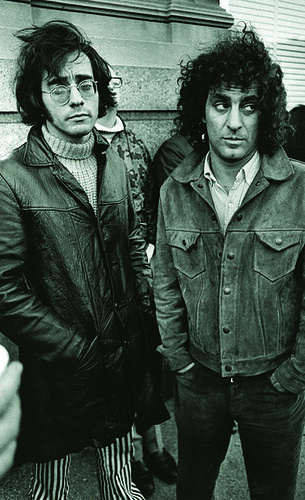
AbeAbbieREV2 copyCREDIT Abe Peck and Abbie Hoffman.

Starting in the mid-1960s, in the zone between 14th Street and Houston, First Avenue and the Alphabet blocks, a wave of longhairs began joining Ukrainians, Puerto Ricans, and pockets of poets, writers and artists. Ingestive preferences turned the grey streets Technicolor. So what if one of my roomie’s father would tell us, “I moved out of a better apartment in this neighborhood in 1924.” We were self-proclaimed life artists, merrily donating our belongings to local intruders into our happy hovels. We were home.

The East Village was where I experienced the end of grad school and the Army Reserves and the start of a community I could call my own. Where I became closer to Sergeant Pepper than to my master sergeant. Where EVO – The East Village Other – mattered.

The Village Voice was literate, and had the apartment ads. But from 1964 to 1973, hundreds of underground newspapers sprang up in every city and college town, and within high schools, the military and even prisons. They varied, but all provided a bent-mirror image of what the dailies and TV news and Time offered: herbs were fine, sex was cool, the Vietnam War sucked, racism was for losers.

Like The San Francisco Oracle (though not as third-eye-y) or my eventual underground-press homeland, the colorful Chicago Seed, EVO began, in late 1965, to chronicle an urban tribe. “We hope to become the mirror of opinion of the new citizenry of the East Village,” EVO declared in its first issue. Read more…


What’s Up With That Doggie in the Window?

It takes a lot to turn heads on the Bowery, but when a reporter for The Local spotted a little white dog jumping at some nude mannequins last night, it was enough to stop and take notice.

“Is that dog stuck there?” said an onlooker who also noticed the pooch barking at passersby. “That poor thing. And those flashing lights can’t be good for the dog.”

Several people stopped to stare and wonder whether the pup was part of the risque display, next-door to the Bowery Poetry Club. Read more…


More on Those Ratner’s Buttons, From the ‘Flea Market King’

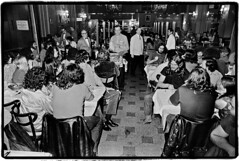
Ratners breakfastAmalie R. Rothschild Breakfast at Ratner’s

We’ve now heard more about those Ratner’s buttons being sold on Craigslist. The vendor, who mysteriously didn’t want to give a name and referred to himself only as the Flea Market King (he also sells the buttons at the flea market at Avenue A and 11th Street on weekends), said that he acquired 40 of the buttons a year and a half ago while he was cleaning out the estate of an electrician who did work at the restaurant – though it’s uncertain whether it was the Ratner’s on Delancey Street or the one on Second Avenue.

Selling for $20 each, the buttons have dwindled to about a dozen: 10 of them went to a Long Island restaurateur who was planning a Ratner’s theme party and turned them into cufflinks.

The Flea Market King, who grew up on the Lower East Side, said he doesn’t hear many stories about Ratner’s from his customers. In fact, he’s usually the one sharing memories. He was a customer at the Delancey Street location (he also worked as a bag boy at the Lion Supermarket near the Second Avenue location) and still lives in the neighborhood, as do the now-elderly children of some of the Ratner’s bakers. Read more…


Amid Cheers, C.B. 2 Votes Against N.Y.U. Expansion

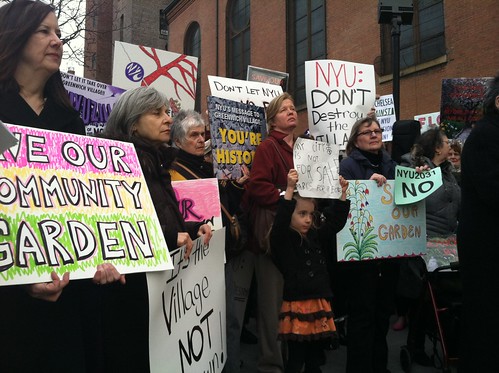
ProtestorsOutsideNatalie Rinn Protestors held a rally before the Community Board’s vote on the N.Y.U. plan.

The ambitious expansion of New York University faced its first formal rejection last night, as Community Board 2 voted unanimously against the plan, saying it would turn Greenwich Village into a construction site for at least 19 years and fundamentally change the neighborhood for the worse.

Not a single person spoke in favor of the plan during over two hours of testimony in the packed basement of St. Anthony of Padua Church on 154 Sullivan Street. After 115 locals, academics and students skewered the plan that would add four new university buildings and 2.5 million square feet of space just south of Washington Square Park, the board cast its vote in opposition to the expansion dubbed “N.Y.U. 2031.”

“We’re here tonight to firmly reject this plan,” said board chair Brad Hoylman. “It’s clear that there is no support for this insidious plan that would destroy the culture of Greenwich Village.”

Cheers went up from the standing-room only audience after the vote, though its impact is limited, given that it is only an advisory opinion. The project will next be considered by Manhattan Borough President Scott Stringer, the City Planning Commission and the City Council, which will ultimately determine the project’s fate. Read more…


After Many Apartments, a Home in the East Village

Michael Clemens lives and writes in the East Village. Here’s how he ended up here.

apt1Michael Clemens

Apartments in New York City are like family members. We like some more than others. We go back and see our favorites and our most hated from time to time, and realize how far we’ve come, or not, since we were last there. I’ve had six apartments in the ten years that I’ve lived here, and my current one, in the East Village, is my favorite.

When I was a student, Columbia provided me with a decent-sized bedroom on 113th Street. They charged about eight grand for the school year, and graciously lumped it into my student loans which will haunt me to the day I die. It overlooked the snow-capped rooftops of Morningside Heights and smelled like paint when the steam heating came on. I lived in it alone my first two semesters of school, and I had no idea how lucky I was.

There, I made fast friends with Daniel, a member of a gay-friendly literally society called Alpha Delta Phi. The society owned a brownstone on 114th Street across from the campus. It had a billiard room, a full copper-topped bar, a backyard and a roof deck, and a working fireplace with a moose head above it supposedly shot by Teddy Roosevelt.

As a kid from Texas I loved space, and as an aspiring pseudo intellectual I longed for the wood paneling and secrets. I got invited to join the group. My first room there was half the size of my room on 113th Street, cost the same and overlooked the hulking mass of Butler library. Late at night, drunk after parties downstairs, I’d look across to the kids diligently studying at the long tables. From my room I’d hear my neighbor across the hall, Irene, being spanked with a paddle. She was into S&M. Read more…


Gunpoint iPhone Robbery on Third Street

Officers in the Ninth Precinct are looking for these two men, suspected of robbing a woman at gunpoint on East Third Street early Wednesday morning.

The police said that around 1:30 a.m., a 19-year-old woman was walking between Avenues A and B when a man wearing a green hooded jacket, jeans, and tan sneakers grabbed her purse; meanwhile an accomplice wearing a surgical-type mask flashed a gun and removed her iPhone. The suspects, both of whom are thought to be in their early 20s, fled toward Avenue A.

As always, call Crime Stoppers at 1-800-577-8477 if you have any information.


The Day | Barriers Go Bye-Bye on Houston Street

East Houston StStephen Rex Brown

Good morning, East Village.

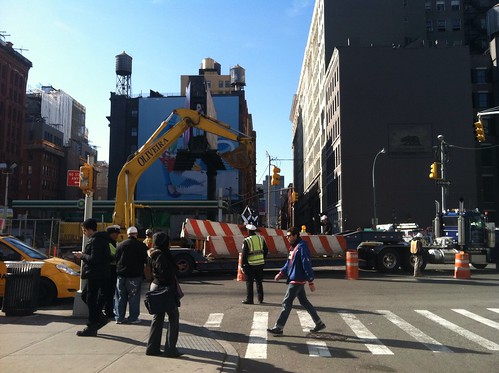
Yesterday The Local spotted a construction crew removing jersey barriers on Houston Street, near Crosby Street – close to where a bus got stuck in August. Will the congested artery be slightly less of a pain now?

According to another press release, Magen David of Union Square, a Sephardic synagogue based in Union Square, is planning to move to new digs on Sullivan Street. The Real Deal has more about the new facility and the $3.3 million building purchase.

The Wall Street Journal reports that online poker player Phil Galfond is selling his East Village duplex, which includes a game room, a wet bar, and a custom-built steel slide connecting two floors, for $4 million.
Read more…


Occupiers Plan ‘Radical Dreaming’ in Tompkins Square Park

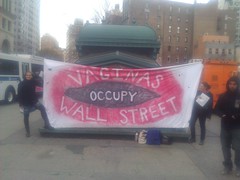
occupyEvan Bleier This banner promoting the Vagina Monologues
(spotted at Astor Place earlier today) has nothing
to do with Occupy Town Square, but we had to
share it somehow.

Nearly a month after an Occupy Wall Street march rolled up to Tompkins Square Park but stopped short of entering it, an offshoot group called Occupy Town Square is planning a day of teach-ins, discussions, “brain monsoons” and “radical dreaming” in the park this Sunday.

Lily Defriend, a 32-year-old Ph.D. candidate at NYU who helped organize two similar roving occupations in Washington Square Park and West Park Church on the Upper West Side, said that the Tompkins Square Park event will address issues like gentrification, squatting, and health care.

“We’re hoping local issues come to the forefront,” she told The Local, adding that her team of about eight people is working with organizations such as the fledgling Occupy Avenue D as well as reaching out to others such as the Tompkins Square Greenmarket and the group that is attempting to return the former CHARAS/El Bohio building to use as a community center. Read more…


51 Astor Reimagined

Curbed asked its readers to redesign the office building that developer Edward Minskoff is bringing to 51 Astor Place. The results are alternately funny and inspired, and worth a look: the winner of the contest (and a $100 gift certificate for the St. Mark’s Bookshop) proposed a building that “would be composed of fragments of lost East Village landmarks. An unfinished work, the building would be continuously assembled, growing taller and more visible as the neighborhood continues to vanish.”


Ratner’s Buttons Up For Sale

Ratners breakfastAmalie R. Rothschild Breakfast at Ratner’s

Here’s a chance to own a piece of East Village history: A Craigslist poster is selling buttons said to have been worn by the servers at Ratner’s, the 24-hour dairy restaurant that was located at 111 Second Avenue (now the Met Foods supermarket) before it closed in 1974. They’re going for $20.

Amalie R. Rothschild noted in her Viewfinder about the Fillmore East that the restaurant, which was next-door to the Fillmore, “had these very old Jewish waiters who were put off by the hippie crowd. They did not like us and were surly and difficult.” Her photo of breakfast at Ratner’s (above) doesn’t show the waiters wearing the buttons, but maybe you remember them? Or were these from the Ratner’s on Delancey Street? We’ve e-mailed the Craigslist poster for more information and will update it if we get it.


Tompkins Square Gets New 24-Hour Deli


Photos: Daniel Maurer

As expected, Tompkins Finest Deli opened Tuesday in the former Avenue A Mini Market space at 153 Avenue A, between 10th and 11th Streets. That’s co-owner Adeeb Ghamem (also a partner in East Village Finest Deli as well as First and First Finest Deli) putting signs up in the window. And here’s the menu, complete with the obligatory Special Sandwiches section. None of them are named after local bloggers as at Tompkins Square Bagels: You’ll have to settle for a Mr. Bean, a Chelsea Antique, or the Amtrack [sic] Express. Read more…


Burglars, Noise, and Money Boys: A Sit-Down With the Ninth’s New Commanding Officer

IMG_3074Stephen Rex Brown Captain John Cappelmann at the Ninth Precinct.

Captain John Cappelmann has taken over his new post as the top police officer in the East Village with a bang, arresting three men suspected of a string of nine middle-of-the-night robberies of local businesses as well as a series of apartment break-ins.

In a conversation with The Local that covered his previous experience policing public housing in Northern Manhattan, gang activity in the East Village and the challenges of quality of life enforcement, the new commanding officer of the Ninth Precinct shared a few more details about the bust.

“Burglaries are the biggest crime that we have here, grand larcenies notwithstanding,” Captain Cappelmann said in his office overlooking East Fifth Street. “We normally average about 16 for a 28-day period. So, that would be four a week on average from last year. Now to go almost three days since the arrest without any burglaries, I think we got the right people.”
Read more…


The Day | Abuse Allegations at P.S. 94

No parkingScott Lynch

Good morning, East Village.

The Times prints a proper obituary for Barney Rosset, the trailblazing publisher who died at the age of 89 on Tuesday. According to his son Peter, he died after a double-heart-valve replacement.

NY1 reports that a teacher’s aide at P.S. 94 was suspended and transferred to another school after she was accused of striking a nine-year-old autistic student on the head and then later grabbing him by the arm and slamming into a chair. “It’s disturbing,” says the mother, “that she’ll be working with other children with special needs that can’t speak and can’t defend themselves.”

Gothamist talks to Lit owner Max Brennan on the bar’s tenth anniversary, who says the neighborhood has changed since the bar opened. “There were many little bar/venues for bands that have since gone out of business and have been replaced with upscale, overpriced coffee lounges and designer clothing boutiques.” Still, he admits “the coffee is pretty good” at Starbucks. Read more…


Five More From Frigid Festival, Opening Tonight

The Frigid New York theater festival starts today and runs until March 4. Earlier this month, The Local recommended five must-see shows that previewed in “snippet” form. Last night at Under St. Marks, some of the cavalcade’s out-of-town participants (Frigid was co-founded by the group that started the San Francisco Fringe Festival and is part of the Canadian Association of Fringe Festivals) offered similar glimpses into shows that were decidedly more personal and eccentric, but not necessarily as recommendable.

While the locals skewed toward ensemble comedy or musical, the travelers tended toward one-man or one-woman shows. “The Rope in Your Hands,” for instance, is a one-woman show about Hurricane Katrina survivors – similar in conceit to “nine/twelve tapes” – in which playwright Siobhan O’Laughlin dramatizes actual interviews that she conducted in New Orleans. Her transformation into an opinionated black engineer was disconcerting at first, but the audience ultimately approved. Read more…


Making It | Barbara Feinman, Milliner

For every East Village business that’s opening or closing, dozens are quietly making it. Here’s one of them: Barbara Feinman Millinery.

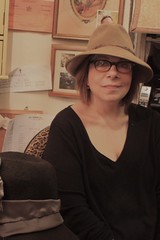
Before she opened her East Village hat shop, Barbara Feinman spent twenty years working office jobs. “I was raised to be a smart Jewish girl who went to college,” she said. “Those girls aren’t supposed to use their hands.” But she burned out on white collar work, took a class at FIT, and decided to become a hat maker. After initially working out of her kitchen, she opened Barbara Feinmen Millinery at 66 East Seventh Street in June of 1998. She recently told The Local how she has managed to make it to 14 years.

Q.

What prompted you to stop working out of your kitchen and seek a proper storefront?

A.

I got a few big orders. One from Barney’s that was a $17,000 order. That was absolutely huge in the 1990s. After that I started sharing a studio space on Ninth Street. When I got a dog and wasn’t allowed to bring my dog to work, that really bugged me since what’s the point of working for myself if I can’t work how I want? That’s when I went solo. I walked around the East Village, saw a sign and walked in. It was walking distance from my home. I grew up around here. I feel most at home here. Plus, fourteen years ago there weren’t many places I could have afforded. Read more…


Barney Rosset, Legendary Publisher of Grove Press, Is Dead

Barney RossetScott Rettberg Barney Rosset at the offices of the Evergreen
Review, 2001

The East Village has lost a legend of letters. Barney Rosset, who championed avant-garde literature and defended first amendment rights as the owner of Grove Press, is dead at the age of 89, per an AP report. The crusading publisher – who more recently operated the Evergreen Review with his fifth wife, Astrid Myers, out of their fourth-floor walk-up near Cooper Square – died in a hospital on Tuesday night.

As documented in a twopart profile at the Los Angeles Review of Books, the Chicago native acquired Grove, then a reprint press, for $3,000 in 1951 and sold it to Ann Getty (only to be ousted from the company) for $2 million in 1986. During that time, he published a who’s-who of cutting-edge authors, introducing American audiences to literary trailblazers such as Samuel Beckett. His list included Jean-Paul Sartre, Allen Ginsberg, Eugene Ionesco, Che Guevara, Malcolm X, Octavio Paz, Pablo Neruda, Jean Genet, Frantz Fanon, Alain Robbe-Grillet, and the Marquis de Sade, to name just a few.

As documented in a 2008 movie about his groundbreaking censorship battles, “Obscene,” he fought in court to print uncensored versions of D.H. Lawrence’s “Lady Chatterley’s Lover,” Henry Miller’s “Tropic of Cancer,” and William Burroughs’s “Naked Lunch.” Read more…